Broken down on I-95: what to do in the first ten minutes
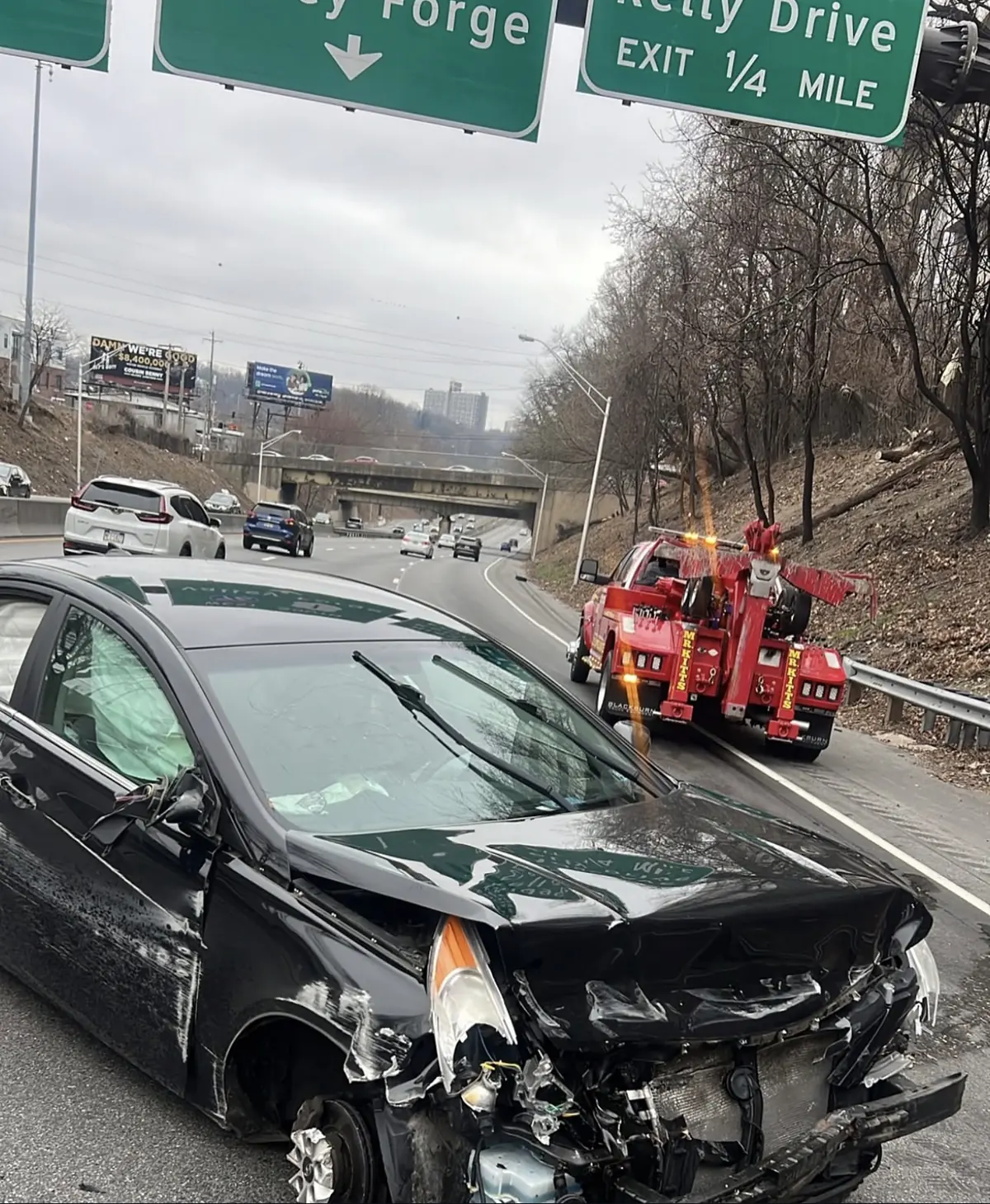
A breakdown on a Philadelphia highway is not the same as a breakdown on a side street. Traffic is moving at speed, the shoulder is narrow in places, and the wrong decision in the first minute is the one that gets somebody hurt. Here is the order that actually matters.
Get the car as far right as it will go
If the engine still runs, use it. Every foot you can put between your vehicle and the travel lane is worth more than anything else you will do. Aim for an exit ramp or a wide shoulder rather than stopping in a curve or under an overpass where nobody sees you until they are on top of you. If the car dies outright, coast as far right as momentum allows and get the wheels off the line.
Hazards on, then get out on the passenger side
Turn the hazards on before you do anything else. Then leave through the passenger door, away from traffic, and stand behind the guardrail or well up the bank. Do not stand in front of your own car and do not sit inside it on a narrow shoulder. A stopped vehicle on a highway gets hit from behind, and the driver's seat is the worst place to be when that happens.
Then call, and be specific
When you call the tow line, the dispatcher is trying to work out three things: where you are, what the vehicle is, and what kind of truck it needs. Give them all three up front and you cut the wait down.
- Direction of travel and the last exit or mile marker you passed. Northbound at Cottman is a different place than southbound at Cottman.
- Year, make and model, and whether it is all-wheel drive. AWD goes on a flatbed, not a wheel lift.
- Whether it rolls, steers and comes out of park. A car that will not roll needs different equipment.
- Whether anyone is hurt, and whether police are already on scene.
If police are already there
On an accident scene the police often call the tow themselves through the rotation list. We are an approved Philadelphia Police rotation provider, so there is a fair chance one of our trucks is what gets sent. If you have a preference and the officer asks, say so.
Once the vehicle is on the truck you have a choice about where it goes. If it needs repair anyway, sending it straight to our shop on Stenton Avenue saves you a second tow and a second phone call later.